
In September 2020, on the second day of the six-week war between Azerbaijan and Armenia over Nagorno-Karabakh, Armenian defense forces used a surface-to-air missile system to shoot down a low-flying, slow-moving object from one of their units.
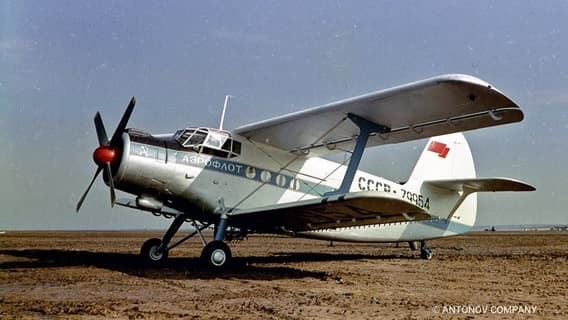
However, what the soldiers shot down was not a high-tech autonomous weapon: they destroyed a single-engine biplane with a propeller, originally produced by the former Soviet Union in the 1940s for agricultural monitoring and management.
The Transformation of the Antonov An-2 Azerbaijan had clearly converted numerous Antonov An-2 piston-engine light aircraft into unmanned aerial vehicles. During the conflict, these aircraft were repeatedly sent on munitions-laden kamikaze missions used to trap Armenian air defenses.
Deployed as a "DECOY DRONE," the Antonov An-2 forced the Armenians to fire their anti-aircraft guns, revealing their defensive positions to Azerbaijani commanders looking for "vulnerable targets." By doing so, Azerbaijan demonstrated to the world that even old hardware like the Antonov An-2 could be repurposed and used effectively in drone warfare. This was another example of armies continuing to find innovative ways to utilize increasingly autonomous systems.
[Image: Antonov An-2 Modification]
A Cost-Effective Strategy Other armies may simulate Azerbaijan's decoy drone tactics in future conflicts. Such unmanned aerial vehicles can be effective tools for diverting an army's attention from the primary objectives of a mission while simultaneously revealing the enemy's positions and capabilities. At the same time, considering that the price of using a decoy drone implies losing an aging piece of scrap metal like the Antonov An-2, it is highly cost-effective.
From Crop Duster to War Machine The Soviet Union first designed the Antonov An-2 in 1946 primarily as a utility aircraft used for crop dusting. The plane's popularity stemmed from its ease of use and low maintenance requirements. Naturally, these features also made the Antonov An-2 a strong candidate for decoy drone conversion. In the 1950s, the Antonov An-2 went into mass production in the Soviet Union, Poland, and China, seeing extensive service since then. However, during the clashes in Nagorno-Karabakh last autumn (2020), the general perception was that the aircraft was largely obsolete, especially for combat. Azerbaijan shattered this belief, using the Antonov An-2 to locate Armenian air defense positions and identify equipment that their forces could target.
The Trap: One-Way Missions Azerbaijan repeatedly sent the Antonov An-2 on one-way, dual-purpose missions to entrap Armenian air defenses and act as a cheap alternative to expensive munitions.
Nagorno-Karabakh media published images and videos of crashed Antonov An-2s, some containing large, unexploded bombs, suggesting that Azerbaijan frequently rigged the drones with munitions. The purpose of this was to ensure the Armenian side would fire at the decoy, despite it being the target of a lethal attack.
Engineers supporting the Azerbaijani forces likely converted the Antonov An-2s into drones by installing pneumatic autopilot guidance systems. (While it is possible that pilots manually set the course of their aircraft before parachuting out, there are no reliable reports of this occurring during the conflict.)
Historical Context and Scale In fact, Azerbaijan was building on previous efforts to turn Antonov An-2s into unmanned aerial vehicles. In 2018, China successfully demonstrated the ability to convert the aircraft into an unmanned cargo plane; Azerbaijan took a different path and repurposed the vehicles for combat.
While we do not know exactly how many Antonov An-2s were used as decoy drones, the number could be significant. In late August 2020, just weeks before the war over Nagorno-Karabakh began, commercial satellite imagery showed approximately 60 Antonov An-2s at the Yevlakh airfield in Azerbaijan. This large inventory dates back to at least 2016, but by the end of the first week of the war in Nagorno-Karabakh, more than half of these Antonov An-2s had left Yevlakh. Once the Armenian Ministry of Defense began announcing this new drone threat, open-source research documented that at least 11 Azerbaijani Antonov An-2s were destroyed during the war.
Source: https://twitter.com/Obs_IL/status/1312760674104283138?s=20
A Global Precedent Azerbaijan is not the first country to use decoy drones in conflicts.
During the 1982 Lebanon War, Israeli UAV systems were used to trap Soviet-made Syrian air defense systems.
A few years later, the South African Air Force deployed drones in the Border War against Cuban and Angolan guerrillas.
Even the United States used its own decoy drones to achieve great success against Iraqi air defenses in the Gulf War.
In every case, decoy drones were used for the same effect: To draw the attention of enemy air defenses, reveal the type and location of anti-aircraft systems used, and render them vulnerable to attacks by artillery fire or specialized attack aircraft.
Conclusion However, the use of the Antonov An-2 in Azerbaijan demonstrates the original and economical use of old equipment in a highly modern and technologically advanced regional conflict. Other armies, especially those with abundant obsolete and old Soviet hardware, will likely follow Azerbaijan's lead. As UAVs and other modern military technologies become increasingly important in conflicts, countries unable to keep up with recent developments and expensive machinery will undoubtedly utilize the equipment at hand—and the results could be just as profitable as those achieved by Azerbaijan.